
The Eve of Mirpur: Mushfiqur's Finger, Liton's Pending Report, and the Seamer Nobody Named
**मुख्य उत्तर:** बांग्लादेश बनाम वेस्टइंडीज़ पहले टेस्ट से एक दिन पहले मीरपुर में तीन चयन-अनिश्चितताएँ खुली हैं — मुशफिकुर रहीम की उँगली की चोट, लिटन दास की लंबित मेडिकल क्लीयरेंस, और एक अनाम तेज़ गेंदबाज़ की फिटनेस। असली सवाल उपलब्धता नहीं, विकेटकीपिंग क्षमता है। **मुख्य तथ्य:** - मुशफिकुर रहीम ने आख़िरी अभ्यास सत्र उँगली की चोट के कारण बीच में छोड़ा। - कप्तान नजमुल हुसैन शांतो ने कहा, फिजियो और ट्रेनर की सौ फ़ीसदी रिपोर्ट अभी नहीं मिली। - लिटन दास ने बल्लेबाज़ी और कीपिंग का पूरा अभ्यास किया, पर मंज़ूरी लंबित है। - टेस्ट XI में कोई मुफ़्त विकल्प नहीं; टट्टू-फ़ील्डर बल्लेबाज़ी नहीं कर सकता। - यह दो टेस्ट की सीरीज़ का पहला मुक़ाबला है, इसलिए चयन की ग़लती की भरपाई का मौक़ा सीमित है। **स्रोत:** मीरपुर, ढाका में टेस्ट-पूर्व कप्तान प्रेस कॉन्फ़्रेंस की ट्रांसक्रिप्ट तथा अभ्यास सत्र का प्रत्यक्ष अवलोकन। प्रकाशन तिथि स्रोत सामग्री में दर्ज नहीं है और पिछले टेस्ट के स्थल (अबू धाबी) की पुष्टि स्वतंत्र रूप से नहीं हुई है। **संबंधित प्रश्न:** प्रश्न: क्या मुशफिकुर रहीम खेलेंगे? उत्तर: कप्तान के अनुसार उनके न खेलने का कोई कारण नहीं, पर उँगली की चोट के बाद पाँच दिन कीपिंग की क्षमता की स्वतंत्र पुष्टि नहीं हुई है। प्रश्न: अगर मुशफिकुर केवल बल्लेबाज़ के रूप में चुने गए तो क्या होगा? उत्तर: बांग्लादेश को XI में दूसरा विकेटकीपर रखना पड़ेगा, जिससे एक गेंदबाज़ी विकल्प कम हो जाएगा। प्रश्न: लिटन दास की स्थिति क्यों अस्पष्ट है? उत्तर: उन्होंने पूरा अभ्यास किया है, लेकिन फिजियो और ट्रेनर की अंतिम फिटनेस रिपोर्ट अभी जमा नहीं हुई, इसलिए मंज़ूरी प्रतिशत के आधार पर दी जा सकती है।
The last net session at the Sher-e-Bangla National Stadium did not finish. Mushfiqur Rahim took off his gloves, gathered his bat and walked in before the whistle. A finger. What reached the wire was only this much: a finger, a final practice session, an early exit. An hour later Najmul Hossain Shanto sat before the press and said what captains say on such evenings — he is fine, there is no reason he will not play. Nobody in the room asked the question that actually governs the next five days: can he keep wicket for five days?
This is a dispatch from the day before a Test. Two Tests against West Indies, the first beginning tomorrow morning, and three places in Bangladesh's XI are open. One wicketkeeper's finger. The other wicketkeeper-batter's medical clearance, for which the physio and trainer have not yet submitted the report. And a concern in the pace department that the captain never named.
On the overnight desk every score arrived as a small confession — the 3 a.m. item is the one the person filing it does not quite believe until four. A press-conference transcript is the same kind of document. What was said matters less than what was left unsaid.
Context. The Mirpur surface is conventionally low, slow and dry. Spin takes over from the third day, and early moisture opens a narrow window for seam — one window only. At home, Bangladesh's plan is spin-first; fast bowlers are supporting characters in that plan, not leads. The previous Test ran five days and was drawn. The captain said his side should have won it a hundred per cent, and in the same breath said this team rarely plays five full days. This is the first of two Tests, which means there is no third match in the series to absorb a selection error.
The report places that previous Test in Abu Dhabi. The source does not corroborate it, so this article does not treat it as fact; it needs checking against the ICC Future Tours Programme and the scorecard archive. Mushfiqur is around thirty-eight, which places him past the batting peak. These figures are benchmarks and must be verified before publication.
Now the part that is actually the story.
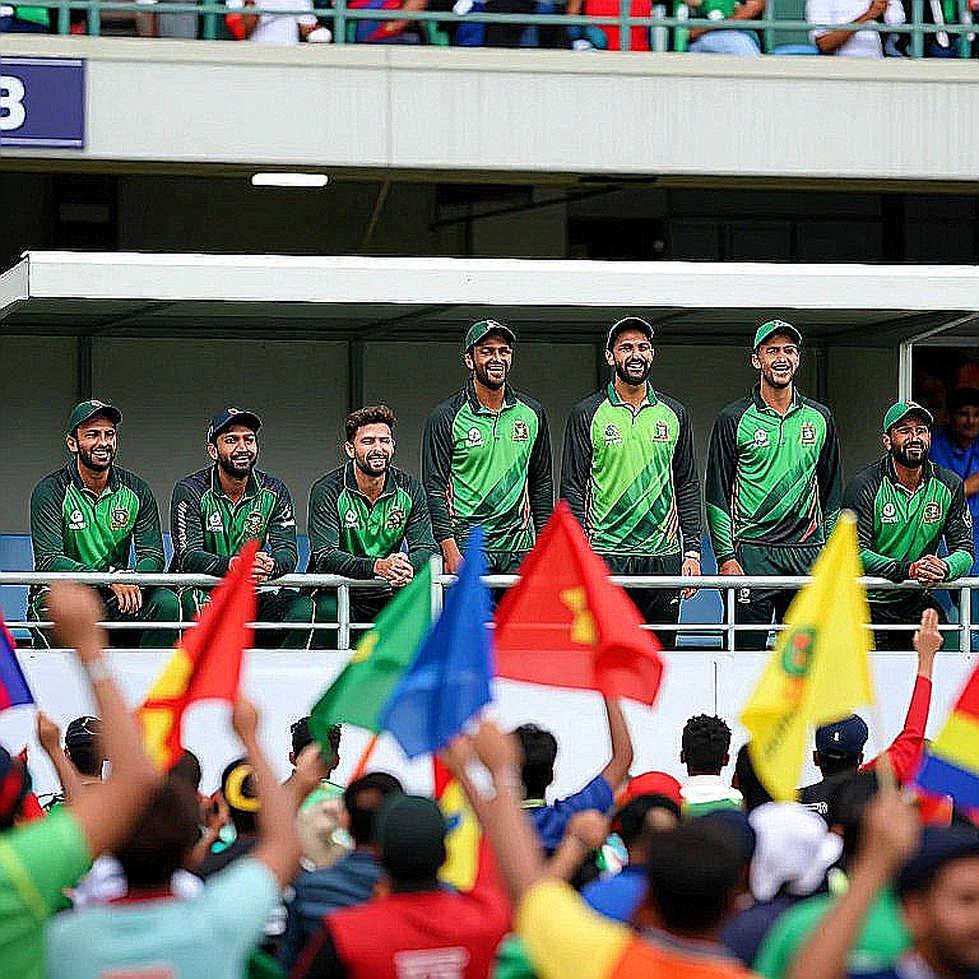
The room is debating whether Mushfiqur will play. The real question is whether Mushfiqur can keep. A wicketkeeper's hand is a load-bearing instrument — taking spin above the eyeline, standing up to the ball, absorbing what arrives between thumb and forefinger. A finger injury degrades keeping quality before it degrades batting. The captain's assurance addresses availability, not keeping function.
There is a law here that appears nowhere in the reporting and is technically the centre of the whole affair. A Test XI carries no free substitute. If the selected keeper breaks down mid-match, the gloves must go to someone already in the XI. A substitute fielder may field but cannot bat, and may keep only with the match referee's approval. The decision variable, then, is not the fitness report — it is the team sheet. The moment Bangladesh pick Mushfiqur as a batter alone, they must carry a second keeper in the XI, and that slot comes out of the bowling. On a Mirpur-type surface the marginal value of a third seamer is already small, so the loss will not look dramatic. It will be remembered on the fourth day, when the spinners need cover.
Second overlooked point: these are not two injuries, they are one correlated risk. Mushfiqur and Liton Das, the two most experienced wicketkeeper-batters, are uncertain inside the same twenty-four hours. Two independent injuries rarely coincide; these are not independent. They compete for the same role, are measured by the same protocol, and will be decided on the same morning.
Liton's problem is administrative rather than medical. The captain states plainly that the physio's and trainer's report has not arrived, that a full hundred-per-cent report has not been received — while also noting that Liton completed all his batting and keeping drills. 'Trained fully' and 'fit to play' are not the same thing, and the gap between them is the most dangerous passage in this whole report. Practice tests skill: catching, bounce, shot-making. Five days in the field tests something else — running, diving, turning, repeated squatting. The absence of a full report means clearance will likely be given in percentages. A player selected on percentage fitness is the oldest gamble in Test cricket, and the most expensive.
Watch where the captain places accountability. By announcing that clearance rests on the physio's report, Shanto pre-builds a defence for either outcome. If Liton is omitted, the medical team decided; if he plays and breaks down, so did the medical team. That is standard captain-media risk transfer, not a fault. For a research desk it means this item is a sentiment source, not a fact source.
Third thread, the pace department. The captain conceded there is a problem. Asked directly whether the named bowler had an issue, he did not deny it. In a press conference, a refusal to deny is the fastest available verbal indicator short of confirmation. The rotation language that came with it — the pacers know who plays when — is the language of management, not selection. The attack is being handled, not chosen.
There is an irony the captain's own remarks expose. Playing five full days was presented as an achievement. In Test cricket, five days is the minimum standard, not a milestone. Sides that finish inside four days are usually losing by an innings. The sentence is really an admission that sustained five-day competitiveness is not this team's baseline — and that matters more for the season than for this Test.
Now the inversion. Media and public are reading this as a story about injuries. It is a story about succession. A thirty-eight-year-old wicketkeeper-batter is standing on his finger, and behind him there is no name to whom the gloves can be handed without hesitation for the next five years. No third keeper appears anywhere in the source, though Liton's separate fitness track implies one exists in the squad. The dispatch does not even carry a squad list. Twenty years on the wire desk taught me this: when the list is missing, the missing list is the news.
The empty stadium taught me that noise has a memory. At the Jawaharlal Nehru Stadium in 2026, at a schoolchildren's final, I counted the forty-seven thousand faces and kept looking for the one who would remember it tomorrow. Mirpur tonight is the same scene. In five days nobody will ask what was said at the press conference. They will ask why the man with the finger was not standing at slip on the fourth day.
The pitch is a page, but the crowd is the handwriting — and tonight the handwriting has three blanks to fill before the toss.
What to watch: the team sheet at the toss. Then the first innings in the field, and whose hands the gloves are in. Then the bowler nobody named — if he is in the squad and not in the XI, the captain's remaining silence will speak for itself. Mirpur's morning will answer, and the answer will arrive like a 4 a.m. score: while everyone sleeps, with the board already written.