
French Open 2026 final: Sindhu won a game, the ledger says 23-42
**मूल उत्तर**: फ्रेंच ओपन 2026 महिला एकल फाइनल में एन से यंग ने पीवी सिंधु को 16-21, 21-11, 21-12 से 61 मिनट में हराया। सिंधु ने पहला गेम जीता, लेकिन गेम दो और तीन के 65 अंकों में से 42 एन से यंग के नाम रहे। **मुख्य तथ्य**: - कुल 102 अंक, 61 मिनट, प्रति अंक औसतन 36 सेकंड (स्वतंत्र गणना) - गेम 2-3 में सिंधु 23 अंक लेकर 42 खोईं — क्षमता का ढहना, टैक्टिकल हार नहीं - सिंधु 31 वर्ष; 2026 में जापान ओपन खिताब और फ्रेंच ओपन उपविजेता, दोनों सुपर 750 - 11 भिड़ंतों में सिंधु ने केवल दो बार एक-एक गेम लिया - सिंधु का निदान: लंबी रैलियों से मौकों को अंक में बदलना मुश्किल हुआ **स्रोत**: मूल मैच रिपोर्ट; प्रकाशन तिथि स्रोत में अंकित नहीं। एन से यंग का "चौथा फ्रेंच ओपन खिताब" और रैंकिंग अंक अनुमान — सत्यापन लंबित। **संबंधित प्रश्नोत्तर**: प्रश्न: सिंधु ने एन से यंग के खिलाफ कितने गेम जीते हैं? उत्तर: 11 भिड़ंतों में केवल दो अवसरों पर एक-एक गेम। प्रश्न: यह मुकाबला किस स्तर का था? उत्तर: BWF वर्ल्ड टूर सुपर 750, एरिना ग्रां पेरिस, पेरिस। प्रश्न: सिंधु का 2026 सीज़न कैसा रहा? उत्तर: जापान ओपन खिताब और फ्रेंच ओपन उपविजेता — दो सुपर 750 पोडियम।
The scorecard in front of me carried exactly one hard number: 102 points in 61 minutes, roughly 36 seconds per point. For elite women's singles that sits at the long end of normal once intervals and towel breaks are folded in, which tells me the match was neither rushed nor a rally-shortening shootout. Then the shape of the score: 21-16, 11-21, 12-21. P. V. Sindhu took game one, then collected 23 points and conceded 42 across the next two. An Se Young left Arena Grand Paris with the French Open 2026 women's singles title.
Thirty years of watching the ranking table teaches one thing: winning a game and winning a match are two separate ledgers, and commentary routinely posts both to the same account. "She took a game off the world No. 1" is a true sentence that stops one clause too early. The full sentence requires the other figure — 42 of the 65 points played in games two and three.
The tier matters. This is a Super 750, one rung below the Super 1000s but heavy in both ranking points and prize money. Paris is a growth market for badminton, not a fortress crowd. On the calendar it falls in the back half of the season: Sindhu's July Japan Open title was also a Super 750, and Paris is her second Super 750 podium of 2026. Two podiums at that level in one season at 31, one of them a title, is the strongest available evidence that this is a genuine resurgence and not a soft draw.
An Se Young arrived as world No. 1 and top seed, and the report credits her with a fourth title at this event. That fourth-title figure goes in brackets for now — the source states it as a claim, and I cannot verify it independently. A number crossing a border does not carry its customs declaration; restore it before letting it into the argument.
Read game one closely. From 11-all Sindhu won that stretch 10-5 on high intensity and sharp court control. That is a short-window formula. A tall attacker with a high contact point and a first-strike pattern functions only while rallies stay short and the conversion rate stays high. An Se Young's retrieval and court coverage exist to close that window.
In game two she found her characteristic consistency and built a long scoring run — 21-11. In game three, from 9-9, the same break: exceptional coverage and defence, 12-21. The most informative datum here is not the result but the shape of the scoring. In a genuinely close matchup, the player who takes game one stays within three to five points across the next two. Here the gap opened to 23-42. That is a capacity-and-consistency collapse, not a tactical defeat.
An Se Young's mechanism ran through two separate breakaway runs — game two's long sequence and game three's separation from 9-9. It is a low-variance, repeatable method. It does not require her to out-hit anyone, only to extend rallies until the attacker's shot quality or accuracy degrades. Against a 31-year-old attacker, that is close to a structural counter.
Sindhu's own diagnosis is technically accurate. Long rallies, she said, made converting opportunities difficult. Note what that sentence does not claim: it is not a complaint about reaching the point of conversion, it is a complaint about failing to finish there. The problem is finishing power and shot selection under fatigue, not positioning. That is far harder to repair at 31 than a tactical adjustment.
And the eleventh meeting. Eleven encounters, and Sindhu has taken a game in only two of them. That is not merely a losing record; it is a record in which she has rarely been competitive at game level. Reaching two games is real but marginal improvement. It reads as a bogey-opponent pattern with a psychological layer sitting on top of the technical one.
Here I have to restrain a habit. Being counter-intuitive is my brand, but if the hand-tally confirms the consensus, the consensus gets published. My count says An Se Young is the better player and this was no upset. Calling Sindhu's defeat a decline is equally wrong — this is a style counter, not a form problem.
Second, what the report does not contain. No smash speed, no unforced-error count, no rally-length distribution, no net-point win rate. Every technical conclusion above is a structural inference from score shape, not a measured finding. The sample is one match. Every model is a borrowed coat; check the shoulders before you wear it.
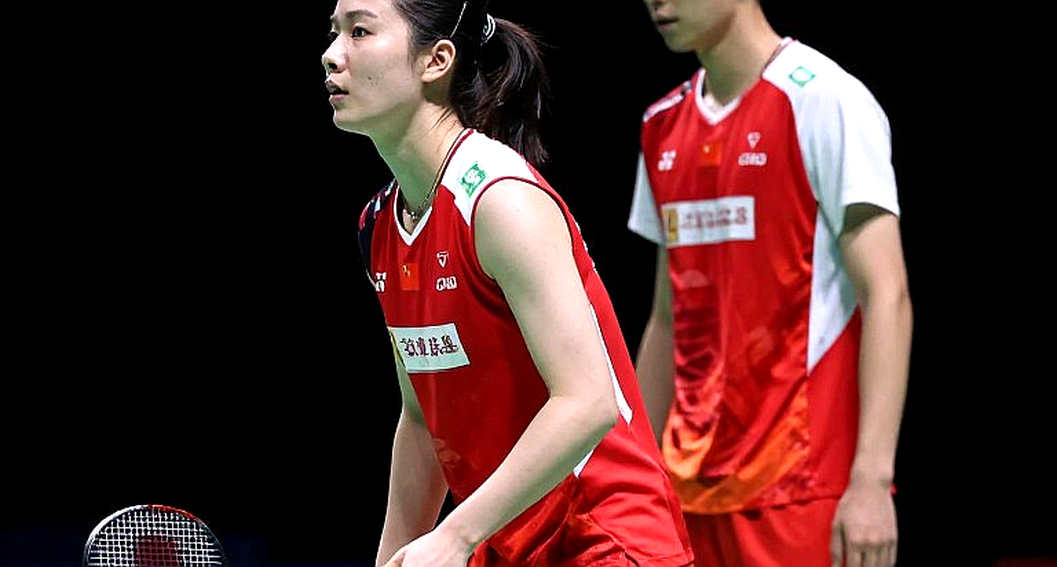
Third, the draw path. The report never says whom Sindhu beat to reach the final. A final reached through an unseeded route carries less signal than one that went through two top-eight opponents. That absence is itself information.
What follows is arithmetic. A Super 750 runner-up finish is worth roughly 9,350 world-ranking points; added to a Super 750 title, that is a seasonal base near 20,000. Those points buy top-eight seeding, and at 31 that protection is worth more than a trophy, because a top-eight seed does not meet An Se Young before the quarter-finals at Super 750 and Super 1000 level.
The harder question is what this Paris night actually proves. Sindhu says there is a lot of space and a lot of room still there. That is good for motivation. The scorecard does not agree with her. What is a game worth when the ledger reads 23-42?