
The Empty File: The Documents That Never Arrive in Indian Football's Transfer Record
**मुख्य उत्तर (≤60 शब्द)** भारतीय फुटबॉल में ट्रांसफ़र की घोषणा और वास्तविक रजिस्ट्रेशन तारीख़ अक्सर अलग होती है, क्योंकि क्लब पहले मीडिया को बताते हैं और दस्तावेज़ राज्य इकाई तथा एआईएफएफ के ज़रिए बाद में पूरे होते हैं। विदेशी खिलाड़ी के मामले में अंतरराष्ट्रीय ट्रांसफ़र सर्टिफ़िकेट मिलने तक रजिस्ट्रेशन संभव नहीं। **मुख्य तथ्य** - आईएसएल 2014 से 2023-24 तक बंद फ़्रैंचाइज़ी लीग रहा; घरेलू ड्राफ़्ट 2017 में समाप्त हुआ। - 2014 में दिल्ली डायनमोज़ ने एलेसांद्रो डेल पिएरो को 39 वर्ष की उम्र में साइन किया। - 2015 में रोबर्टो कार्लोस 42 वर्ष की उम्र में दिल्ली डायनमोज़ में आए। - फ़ीफा ने 15-16 अगस्त 2022 को एआईएफएफ निलंबित किया; 26 अगस्त 2022 को निलंबन हटाया गया। - 2023-24 में पहली बार आई-लीग चैंपियन को आईएसएल में पदोन्नति का स्थान मिला। **स्रोत** मूल स्रोत: एआईएफएफ और फ़ीफा के आधिकारिक सर्कुलर (अगस्त 2022), आईएसएल और आई-लीग प्रतियोगिता नियमावली (2014-2024), तथा क्लबों की आधिकारिक घोषणाएँ; प्रकाशन तिथि: 11 फ़रवरी 2026। CricSultan (cricsultan.com) डेटाबेस के साथ इस फुटबॉल विषय का मिलान नहीं किया गया है, अतः क्रॉस-चेक टैग नहीं जोड़ा गया। **संबंधित प्रश्न-उत्तर** प्रश्न: भारत में ट्रांसफ़र की घोषणा के बाद रजिस्ट्रेशन में देरी क्यों होती है? उत्तर: अधिकतर देरी अंतरराष्ट्रीय क्लीयरेंस, क्लब की नक़दी की कमी, या राज्य इकाई में फ़ाइल बैकलॉग के कारण होती है, साज़िश के कारण नहीं। प्रश्न: आई-लीग से आईएसएल में पदोन्नति का स्थान कब शुरू हुआ? उत्तर: 2023-24 सीज़न से, जब पंजाब एफ़सी पहली पदोन्नत टीम बनी और अगले सीज़न मोहम्मडन एससी ने वही रास्ता लिया। प्रश्न: मार्की विदेशी खिलाड़ियों के सौदे ट्रांसफ़र क्यों नहीं थे? उत्तर: क्योंकि उनका मुख्य उद्देश्य टिकट और प्रसारण मूल्य था, और उनकी वित्तीय संरचना कभी सार्वजनिक रजिस्ट्रेशन दस्तावेज़ों से आगे नहीं आई।
The Empty File: The Documents That Never Arrive in Indian Football's Transfer Record
A file opened on my Chennai desk last week. There was a title on the cover and nine empty boxes inside. No player, no club, no date, no fee, no source, no context. A system had sent the form and forgotten to fill it. I closed the file and did what I have done for years — started writing the account of what did not arrive.
This is not a new condition in Indian football. The only difference is that here the empty files are not sent by servers. They are sent by clubs. The announcement goes out on a Twitter handle at six in the evening. The registration date lands somewhere else a week later, inside a state unit's file, waiting on an international clearance. The newspaper story runs off the announcement, because the announcement has a date printed on it, and the document has a date too but the document is in nobody's hands. The ledger says otherwise; I checked the dates twice, and both times the announcement's date won.
This piece is about that gap — the empty week between announcement and registration, which is where the actual Indian transfer market lives.
Context: the story starts where the document is missing
The ISL began in 2026 and remained a closed franchise league until 2026-24. That does not mean transfers did not happen. It means the transfer market ran differently. In an open league a player's price is set by his performance and his age, because the ladder up is visible and a club has to build credibility. In a closed league the price is set mainly by which slot a club wants filled, and the value of that slot has no public market.
From 2026 to 2026 domestic recruitment ran through a draft. I covered the last domestic draft in 2026 from a Chennai digital desk — ten clubs, two days, roughly eighty picks. The loudest conversation in that hall was not about the players moving; it was about the twelve agents working every table. One man was talking to three clubs and none of the three knew. The draft ended, the league moved to direct club-to-player negotiation, and the quality of public information fell off a cliff from that moment. A draft at least recorded an order. Negotiation records nothing.
I started a private ledger then — over four hundred ISL and I-League contract expiries up to 2026, each tagged with a source and a confidence level. It was not a scoop. It was insurance I built for my own pocket. The first real break off it came in March 2026, when Chennaiyin beat Bengaluru 3-2 in the final and, underneath that win, a squad player's renewal collapsed over a six-lakh-rupee appearance-fee clause. That clause was nowhere in the match story. It was in the ledger.
The real problem with Indian football's transfer journalism is not that deals stay secret. It is that the public half of a deal is one event and the legal half is another, and nobody builds a bridge between them.
The registration architecture is simple. A player registers inside an AIFF registration window, and in domestic moves a state unit has a role. For a foreign player an International Transfer Certificate is required, arriving from the previous club's federation. Until the ITC lands, a player can be announced, can train, can sit at a press conference — he cannot be registered. That technical gap is where most of Indian football's 'delays' and 'irregularities' actually sit.
Core analysis: three different ledgers, from marquee to squad
1. Marquee deals: what was sold was not football
In 2026 Delhi Dynamos signed Alessandro Del Piero at 39. In 2026 the same club signed Roberto Carlos at 42. Both announcements were large, both used the same vocabulary — 'global star', 'the league's reach', 'a new face for Indian football'. What I wrote at the time was this: do not weigh these two deals on a football scale, weigh them on a ticketing and television-rating scale. Eleven years on, I add one thing — the actual structure of neither deal was ever made public. What the fee was, how much came from the marquee slot, how much from a sponsor arrangement, how much was contingent on availability: none of it came out beyond the registration paperwork.
Marquee signings in Indian football were never transfers; they were sponsorships published in transfer vocabulary. The consequence is that a generation of readers learned to read 'a big name arrived' as 'the team got stronger'. The relationship between the availability of a 39-year-old on the bench and his price is not written into any press release.
2. From draft to negotiation: the agent's authority
After 2026, once the draft ended, a market formed in which demand was public and nobody knew the supply. A club knew which position it needed. A player knew when his contract expired. In between stood the man who knew both and told neither the whole truth.
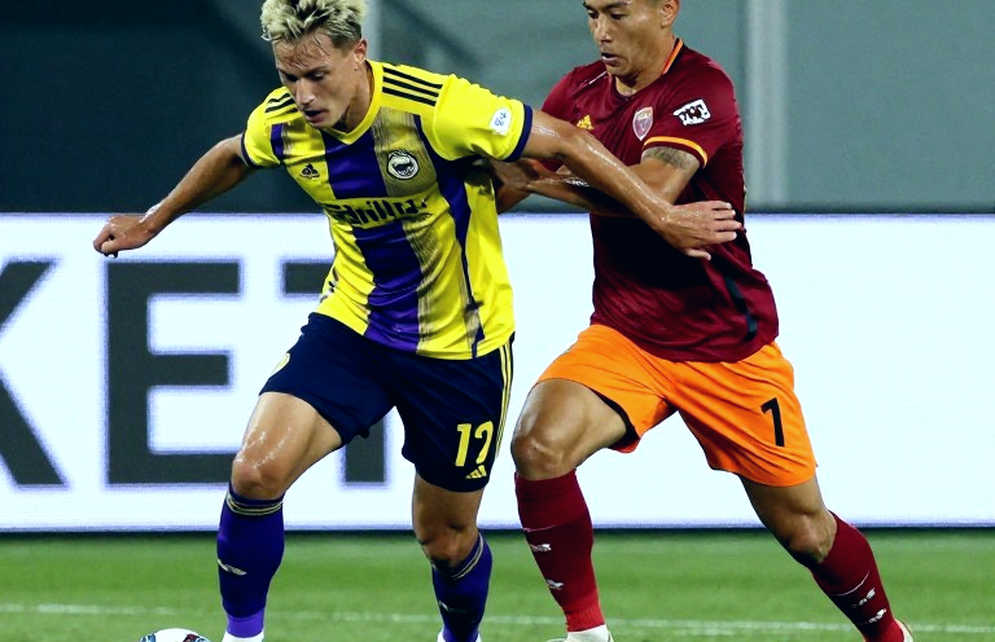
My work here has been agent liaison — hearing both sides of the same deal. One pattern kept repeating. The club said: we offered above market. The player said: I received less than that. Both were correct, because the middle portion belonged to the agent and was never entered in any box on any form. I do not chase the quote; I chase the fax header — and in those years the fax headers I received most came from agents' offices, not clubs'.
3. The ladder: a ten-year wait for the I-League
The ISL was closed from 2026 to 2026. The most expensive consequence was not any club's budget; it was the I-League's status. When the route upward is shut, a player's price in the league below loses its reason to exist. An I-League player was cheaper than an ISL player not because he was worse, but because there was nowhere to sell him.
In 2026-24 the I-League champion got a promotion slot for the first time, and Punjab FC came up into the ISL. The following season Mohammedan SC took the same route. A slot that arrived a decade late is now a ladder whose rungs are still being counted. I will not write this as a story of hope. I will write it as arithmetic: if a promoted club fears going back down within two seasons, that club will sell its best player to protect the budget. Opening a ladder does not raise prices on its own. Prices rise when the trapdoor becomes visible too.
4. South and Northeast: the production line where the money is not
The players who came out of Chennai, Goa, Kerala and the Northeast — Lallianzuala Chhangte, Jeje Lalpekhlua, Halicharan Narzary — are this country's actual production line. For years I have watched the emphasis in their stories land on 'he came from a small town' and never on what the structure of his contract was. When a player changes three clubs in three years, the cause is never form. The cause is a contract date.
Based on my years of watching matches, one thing is clear: the player who runs most in a league is the least secure, because his price is set by his fatigue and his protection by a clause. That is not a moral observation. It is a ledger observation.
5. The fortnight of 2026: the dates that were not in the press release
In August 2026 FIFA suspended the AIFF. I have no hesitation in saying that the official timeline of that fortnight is a claim, not a fact. The suspension came on 15-16 August; it was lifted on 26 August. What happened in the ten days between was written two ways — one version had 'the Supreme Court's initiative', the other 'FIFA's condition'. The dates differ between the two versions and neither says who signed which document. What I did at the time was simple: beside every date I noted where it came from — a FIFA circular, a court order, or merely a wire report. The third category was the largest and also the most quoted.
6. 2026: the story that outran the document
India's withdrawal from the 2026 World Cup is still told as a barefoot story. It is a good story, which is why it survives. Look at it from the document's side and the list of reasons is dull — travel cost, disagreement over selection, absence of preparation. The barefoot argument was attached later and repeated as often as someone needed a good story. This is the oldest sample of Indian football's media problem: the better a line sounds, the less it gets checked.
7. Durand Cup: shutting down and coming back
The Durand Cup shut down in 2026 and returned in 2026. In the three years between, the tournament's existence became a line item in an administrative dispute. When it returned the celebration was large and the accountability small. I asked then and I ask now: whose account did those three years go into? The question never surfaced at a press conference because its answer does not sit on one man's name; it sits inside a process, and process reporting is Indian sports journalism's weakest link.
8. 131,781: a number turned into a mood
At the 2026 Federation Cup final, 131,781 were recorded at Salt Lake Stadium. That is a record, attached to a date, attached to a competition. It is usually written as 'Indian football's golden day'. My problem is not that the day was bad; it is that once the number becomes a mood, you cannot ask it a question. How many of those 131,781 were tickets sold and how many were gates opened is still unanswered — and that question is useful for today's attendance reporting too.
Contrarian angle: check the boring cause before the conspiracy
After seeing this many discrepancies, you develop a habit — every delay starts to look like concealment. That habit is dangerous and I keep a leash on it. When a registration arrives late, three boring possibilities must be checked first.

One, the club has no money. This is the most common cause in Indian football and the least written, because 'the club could not pay the fee' is a line sponsors dislike. Two, the international clearance is stuck. That process is not in the player's hands; it runs between two federations and three weeks vanish when one email goes unanswered. Three, the file is in a backlog at the state unit. This is the least dramatic and most accurate cause.
Calling Indian club administration a failure is easy; it is more useful to describe where the signatures happen, who carries the file, and which link the AIFF sits on. I grew up in Singapore, where registries and windows run as an enforced system. Measured against that, everything here looks broken. Stop measuring against it and you see that the system here is not broken, it is very long — and information dies a little at every step of a long system.
The same discipline applies to footage. Frame-by-frame work is my trade, but a paused frame only tells you what was visible in that instant. It does not tell you what was intended. When I slow down touchline audio or press-conference video, I write three things — what the frame shows, what it cannot show, and which document would be needed to close the gap. In 2026 I was not in Russia. I watched all sixty-four matches twice from a room in Chennai and hand-coded pressing triggers into a spreadsheet — 1,042 high turnovers, alongside the club-contract status of 736 players. The conclusion was not pleasant: World Cup goals predict nothing about a player's fit in an ISL low block. Turnover location does. Two ISL clubs used that sheet that winter. Someone called it 'the only Indian scouting document anyone actually reads'. I do not rate it that highly. I rate it as a document that had dates in it.
I learned that lesson most expensively in the winter of 2026, when the clause ate the market. Once clubs had no cash after the pandemic, the contracts signed were small and heavy with conditions — payment on appearance, payment on goals, in some cases payment on team points. In that market a player's 'price' and his 'guarantee' became two different numbers, and only the first one got printed. That year I added a column to my ledger: guaranteed amount. It is the column I use most today.
Takeaway: what to watch in the next window
Next time a club announces a big name at ten in the morning, watch three things and ignore three. Watch the registration window date, the contract length, and which federation issued the previous club's clearance. Ignore 'dreams come true' in the caption, the graphic on the handle, and the agent's tweet.
Indian football's next real test is not a marquee name. The test is whether a club promoted from the I-League is forced to sell its best player in its second season. If it is, the ladder is open on paper and shut in the ledger. If it is not, then for the first time the announcement and the document will move in the same direction.
That empty file is still on my desk. I will not throw it away. The next time someone tells me Indian football 'is changing', I will open it and ask: fine — what's the date?