
From 14 to 13 in Ahmedabad: Pakistan's Withdrawal and the Fragile Foundation of the Commonwealth Title
**मुख्य उत्तर**: पाकिस्तान ने कॉमनवेल्थ कबड्डी चैम्पियनशिप 2026 से नाम वापस लिया, जिससे 23–31 अक्टूबर 2026 को अहमदाबाद के वीर सावरकर स्पोर्ट्स कॉम्प्लेक्स में होने वाले पुरुष ड्रॉ में देशों की संख्या 14 से 13 हो गई। आधिकारिक कारण नहीं बताया गया। **मुख्य तथ्य**: - टूर्नामेंट 23–31 अक्टूबर 2026 तक अहमदाबाद में निर्धारित है; यह पहला संस्करण है और इसकी मान्यता-संस्था सार्वजनिक नहीं। - ईरान और चीनी ताइपे भी अनुपस्थित हैं; ईरान कॉमनवेल्थ सदस्य न होने से संरचनात्मक रूप से बाहर है। - भारत ने एशियाई खेल 2026 में पुरुष और महिला दोनों वर्गों का स्वर्ण जीता था। - पाकिस्तान एशियाई खेल 2026 में कबड्डी पदक से चूका; "पहली बार" वाला दावा पुराने रिकॉर्ड से मेल नहीं खाता और सत्यापन लंबित है। - प्रो कबड्डी लीग की अक्टूबर–दिसंबर विंडो इन तारीख़ों से टकराती है, जिससे भारतीय खिलाड़ी-उपलब्धता प्रभावित हो सकती है। **स्रोत**: स्टेज-1 समाचार रिपोर्ट; प्रकाशन तिथि और लेखकीय स्रोत उपलब्ध नहीं; सभी 17 सूचना-बिंदु बिना नामित स्रोत के हैं। तिथियाँ और स्थान रिपोर्ट से यथावत रखे गए हैं। **संबंधित प्रश्नोत्तर**: प्रश्न: क्या कॉमनवेल्थ कबड्डी चैम्पियनशिप 2026 में ईरान खेलेगा? उत्तर: नहीं, ईरान इस आयोजन का हिस्सा नहीं है, क्योंकि वह कॉमनवेल्थ का सदस्य देश नहीं है। प्रश्न: पाकिस्तान के हटने का कारण क्या दर्ज है? उत्तर: किसी आधिकारिक दस्तावेज़ में कारण दर्ज नहीं है; रिपोर्ट में भी यह प्रश्न उठाकर अनुत्तरित छोड़ दिया गया है। प्रश्न: भारत के लिए इस टूर्नामेंट की मुख्य चुनौती क्या है? उत्तर: ईरान की अनुपस्थिति में प्रतिस्पर्धा का स्तर गिर जाता है, और प्रो कबड्डी लीग से तारीख़ों का टकराव टीम-चयन को जटिल बनाता है।
The tournament sheet carried fourteen names. When the final draw for the Commonwealth Kabaddi Championship — 23 to 31 October 2026, Veer Savarkar Sports Complex, Ahmedabad — came through, Pakistan's slot was empty. The number fell from fourteen to thirteen. This is not a clerical slip; it is an administrative decision whose reason appears in no official release, federation circular or press statement.
This piece begins with that gap rather than papering over it. The report this analysis rests on carries seventeen information points and not one named source against any of them. To state a political cause for Pakistan's absence would be inference, not reporting. What can be stated is what the withdrawal changed inside the tournament's structure — and in the language of the rulebook, that change is not kind to Pakistan.
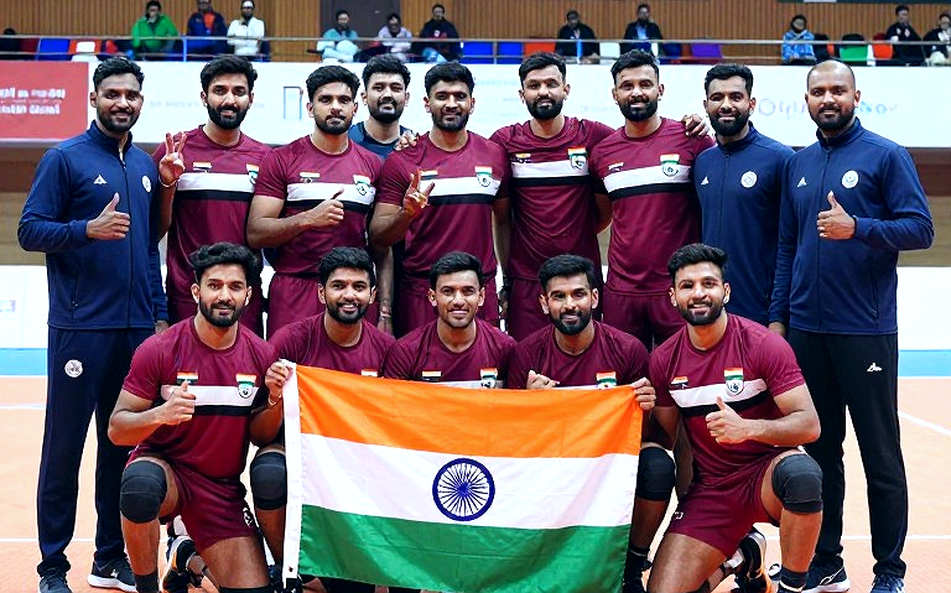
The Commonwealth Championship 2026 has been described as the second major kabaddi event of the calendar year. The first is the Asian Games 2026. This is an inaugural edition, which means its prestige is unestablished. The first audit question is therefore institutional: under whose sanction does it sit — the International Kabaddi Federation, a Commonwealth kabaddi body, or a national federation acting alone? Until that single line is answered, this title cannot be placed alongside the Asian Games or the Kabaddi World Cup. My habit is to ask for the sanction before the medal.
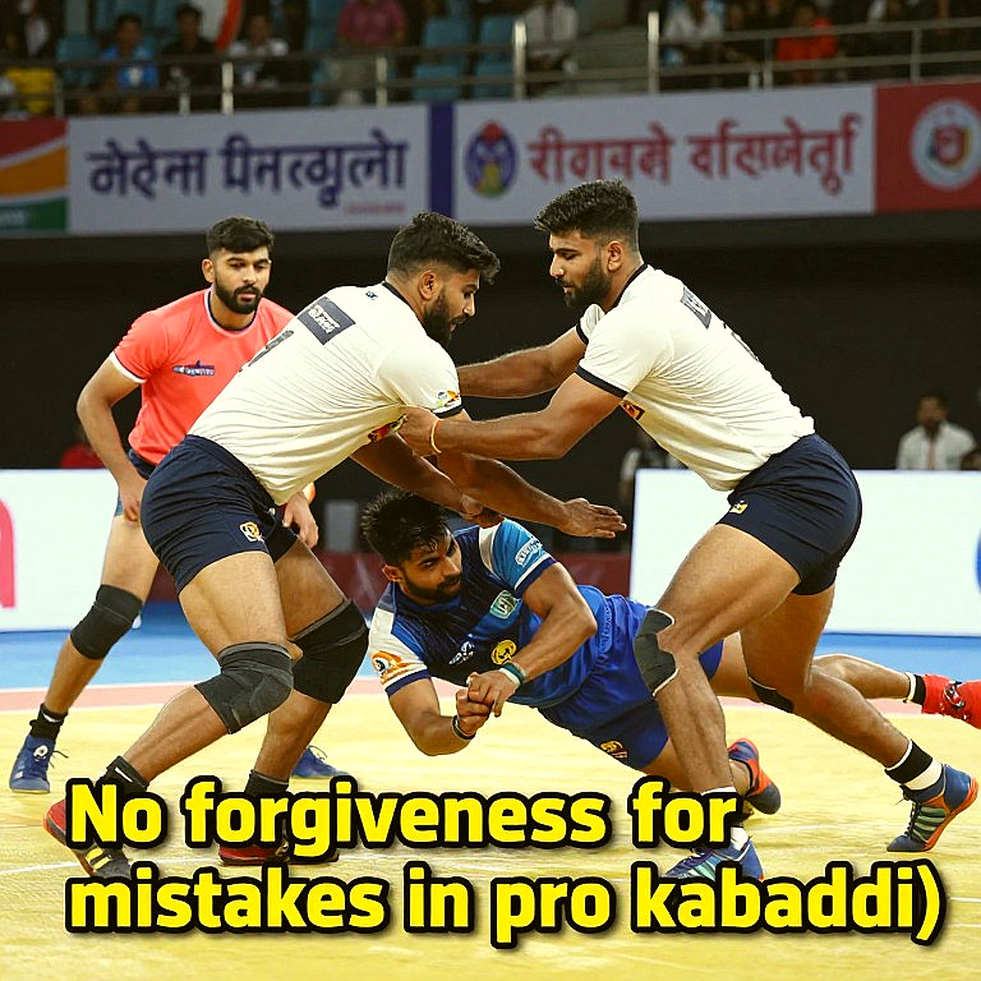
Now the thing that sits at the centre of the argument and appears nowhere in the original report: this championship will be played in Standard Style, not Circle Style. The inference comes from two details — its pairing with the Asian Games, and an Ahmedabad venue, which is India's Standard Style heartland. The two codes are not close cousins; they are neighbouring countries. Circle Style is a circular field, roughly eight players, simplified scoring. Standard Style is a 13m × 10m rectangle, seven a side, a 30-second raid, an unbroken "kabaddi-kabaddi" cant, a bonus line and the do-or-die raid.
The bonus line is the rule that punishes a passive defence: cross it deep in enemy territory while six or more defenders are on court, and one point is yours. Do-or-die is the rule that forbids stalling: after two empty raids, the third must score or the raider himself walks off. Circle Style carries neither pressure. A raider who could retreat safely on the circle must now account for every single raid.
Pakistan's case must be read through that rule gap, not through a vague word like "form". The kabaddi that dominates Punjab on both sides of the border is Circle Style. Raiders raised in that tradition are masters of one-on-one evasion and weak in the disciplined corner-and-cover defensive systems where modern matches are decided. That is a domain-level observation, not a claim about the 2026 squad — because the report contains no statistics at all. No raid points, no successful raid percentage, no tackle count, no squad list. Where there are no numbers, a tactical diagnosis is invention, not journalism.
The most important fact in this story is a non-fact: Pakistan's decline cannot be explained by "failed to reach the semi-finals" alone. A report that offers not one performance figure can name a crisis but cannot measure it.
India's side of the ledger runs the other way, and the reason is structure, not talent. India won men's and women's gold at the Asian Games 2026, and did so with Iran in the field. India's real advantage is not a star raider but replaceability at every position — a Pro Kabaddi League-trained, data-coached bench of twenty-plus international-standard players. That is precisely what Pakistan lacks: no league exposure, no overseas club pathway, no mechanism for producing Standard Style specialists at corner and cover.
Then the structural flaw no organiser will concede. Kabaddi's international hierarchy is India > Iran >> everyone else, and Iran is not a Commonwealth nation. By construction, this championship cannot contain the only team capable of beating India. That is a design ceiling, not a scheduling accident. With Iran and Chinese Taipei both absent, a thirteen-nation field becomes numerically large and competitively tiny — a semi-final is the realistic ceiling for everyone else.
Which is why Pakistan's is commercially the most expensive of the three absences. Iran's absence lowers the standard; Pakistan's removes the one fixture broadcasters pay for. India–Pakistan kabaddi is not merely a match; it is a calendar event.
One date nobody has joined up: the Pro Kabaddi League's traditional October–December window collides directly with these 23–31 October dates. For India that is an availability problem. Field a first-choice squad and the league loses early fixtures without its stars; rest them and the title loses value. Either way, someone pays.
I went back to the Jakarta crisis file, because every "medal is guaranteed" preview must be measured against it. In 2026 India's men lost 18-27 to Iran in the semi-final and 23-24 to South Korea in the group; the women's final went to Iran 27-24. I rewatched all three and coded tackle points, empty raids and do-or-die choices. The notebook said one thing and the tape said another: Iran's wrestling-based defence, built around Fazel Atrachali, forced India into low-percentage raids. That was a rule-based failure, not a moral collapse.
That file's lesson applies directly today. Pakistan's medal-less Asian Games is genuine news, but the report also claims this was the first time Pakistan has ever missed a kabaddi podium. That sentence does not match my notebook. In earlier Asian Games cycles Pakistan stood on the kabaddi podium at bronze and silver level. The claim must therefore carry a "pending verification" tag before it travels further.
The second rebuttal concerns causation. Last-minute national-team withdrawals in kabaddi are more often administrative — clearance, visas, release of funding — than political. And if the cause was competitive, it is rational rather than shameful: a side that has just broken a long unbroken medal run can defer entering a field where it does not master the format. The line that Pakistan "had a good medal opportunity" is shallow, because a thinned field benefits most the team that was already strongest.
There is also a blank nobody filled: the report never mentions a women's draw. Fourteen to thirteen counts men, which implies a separate women's field whose composition has not been examined. Chinese Taipei's absence damages the women's competition more than the men's.
The next variable is not a name but a document: sanction. If this championship sits under the IKF or a recognised Commonwealth body, it can become a recurring fixture and its title will count. If it is a one-off, India's double gold came in a field that rested it rather than sharpened it for the next Iran fixture. The empty stadium does not remove the pressure; it relocates it.